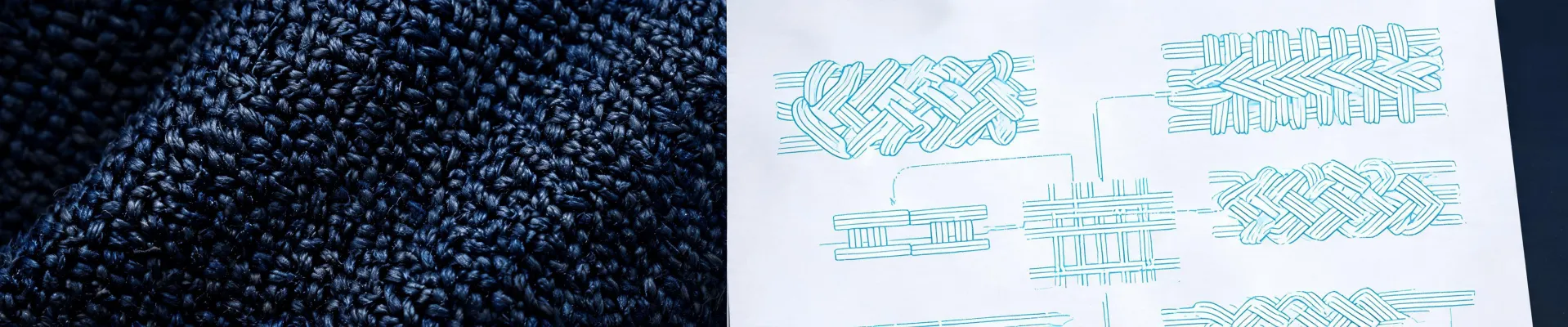
The folder with three swatches
I'm the office administrator for a 160-person architecture and interiors firm. I manage facilities ordering—roughly $380,000 a year across 11 vendors—and I report to both operations and finance. In January 2025, our ops director handed me a folder with three fabric swatches and a date: the firm's 25th anniversary office refresh, plus a small run of textile anniversary gifts for long-tenured staff.
The design team had already specified Romo Group fabrics for the reception banquette and eight meeting-room chairs. They wanted Romo velvet fabric for three lounge chairs in the client suite. I didn't know much about Romo beyond the showroom samples, but I knew the project was visible. Finance wanted three quotes. The design lead wanted no substitutions. I was in the middle.
From the outside, sourcing decorative fabric looks like a simple price comparison. The reality is that the quote is only one line in a much longer spreadsheet—dye lots, backing, lead times, invoice terms, and who answers the phone when a roll arrives with a flaw.
The $1,800 spread
I went back and forth between the authorized Romo showroom and a local workroom for two weeks. The Romo quote came in at $6,900 for the specified fabrics, including a Romo wallcovering for the reception alcove. The local workroom quoted $5,100 using an imported lookalike velvet and a similar-weight upholstery. That's an $1,800 spread—real money, especially when finance had already flagged the furniture line.
On paper, the cheaper option made sense. But my gut said the anniversary project was too important to risk. I kept asking the workroom for a current test report and dye-lot confirmation. They sent a photo of a sample on a conference table. When I asked for the abrasion method, they said it was 'commercial grade.' Per FTC advertising guidelines (ftc.gov), vendors must substantiate claims like that. I wasn't trying to be difficult. I just needed a document I could attach to the PO.
The most frustrating part of that week: the same phrase kept showing up in emails—'equivalent quality.' You'd think equivalent would mean matching construction and backing, but interpretation varies wildly. One vendor meant 'same color family.' Another meant 'same weight per square yard.' Nobody meant the same thing.
What is a textile medium, and why 'textile armor' kept coming up
During a sample review, our new intern asked what is a textile medium. I'd been using the term loosely for years. The Romo rep gave the clearest answer: in decorative fabrics, the medium is the construction and finish—the ground cloth, pile, backing, or coating that carries the color and determines how the fabric behaves. It's not just the pretty face. That mattered because the design team kept calling the performance backing a kind of textile armor.
'Armor helps,' the rep said. 'It doesn't replace the right fabric for the traffic.'
That was the turning point. I stopped comparing swatches by look alone and started comparing what was behind them. The Romo velvet fabric had a spec sheet with cleaning code, lightfastness, and abrasion data. The lookalike had a nice hand feel and a lower price, but the backing felt papery, and the second roll hadn't been dye-lotted with the first. I still kick myself for not asking about dye-lot matching on the first call. If I had, I'd have saved a week of back-and-forth.
It's tempting to think a lower unit price means a more efficient vendor. But the hidden costs show up later: reupholstery, expedited shipping, and the labor to explain to finance why the first invoice was rejected. That $1,800 saving would've been gone after one redo. I've watched a neighboring office reupholster two chairs because the second roll didn't match. The redo cost them about $1,450 and ten days—right before a client tour.
The anniversary gifts and the shipping line I forgot
We went with the Romo Group fabrics through the authorized showroom. The order wasn't the cheapest line in the budget, but it was the one I could defend. The banquette and chairs arrived on schedule, and the dye lots matched. We used the Romo velvet fabric offcuts to make 30 small zippered pouches as textile anniversary gifts for staff who'd been with us ten years or more. They felt more intentional than another engraved glass award, and the fabric already had a story in the office.
What I forgot was shipping. According to USPS pricing effective January 2025, a First-Class Mail letter (1 oz) was $0.73, but the pouches needed padded mailers. For the 12 off-site staff, I used a local courier instead of guessing at postage. That wasn't a huge cost, but it was a line item I hadn't budgeted. Now I add a shipping-and-handling column to every gift order—even the small ones.
Here's the thing: the project didn't feel like a win because we spent more on fabric. It felt like a win because nobody had to redo it. Operations didn't have to chase a missing invoice. The design lead didn't have to explain a shade variation to a client. Finance got a clean PO and a vendor that answered the phone.
What I'd do differently
I'm not saying the lowest quote is always wrong. I'm saying it's not a decision—it's a starting point. If I ran this again, I'd ask five questions before I compared prices: Can you confirm the dye lot in writing? What's the abrasion test method? Who provides the backing or finish? What's the lead time if a roll arrives damaged? And can you invoice against a PO?
I'd also separate the anniversary gift order from the furniture order. Textile anniversary gifts sound simple, but they need their own sample, quantity, and delivery timeline. Mixing them into the furniture PO made the invoice harder to reconcile.
Would I specify Romo Group fabrics again? For a visible, high-traffic area with a fixed date, yes—if the budget can carry it. The value wasn't the label. It was the certainty: matched dye lots, documented specs, and a showroom that could show me the difference between a face and a medium. That's worth more than $1,800 when the room has to be ready for a 25th anniversary and the whole company is watching.

Beatriz Costa
Beatriz Costa is an outdoor and performance-fabric analyst specializing in waterproof shells, breathable laminates, ripstop, nylon and polyester oxford, tent cloth, backpack fabrics, awnings, and solution-dyed textiles. She uses ISO 811 hydrostatic-pressure and ISO 13937-2 tear methods while tracking water resistance, tear force, moisture-vapour transmission, air permeability, coating adhesion, UV colourfastness, abrasion, and low-temperature flexibility. Her technical comparisons help outdoor brands, converters, and equipment manufacturers balance protection, breathability, durability, packability, seam construction, and climate exposure.